SOC 2 Type I vs Type II: What Startups Should Choose in 2026
SOC 2 Type I vs Type II: What Startups Should Choose in 2026
Medha Bhatt, Product Manager at SaaSAudit
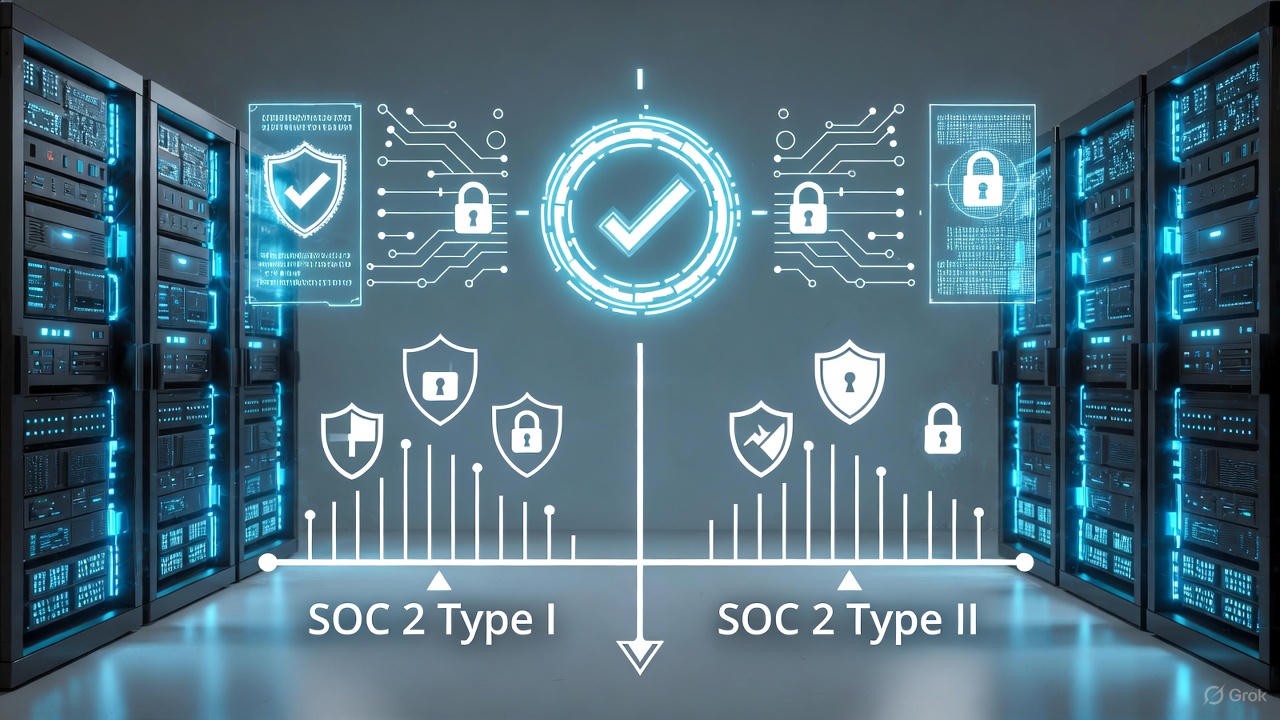
SOC 2 continues to be one of the biggest blockers and enablers of revenue for SaaS startups. But before beginning the journey, every team faces the same question:
Do we go for SOC 2 Type I or Type II?
This concise guide breaks down what each one means, what customers expect, and how startups should decide in 2026.
1. What’s the Difference?
SOC 2 Type I → “Designed Correctly Today”
SOC 2 Type I consists of point-in-time evaluation.
The auditor checks whether your security controls exist and are designed properly on a specific date.
Good for:
Proving early maturity
Unblocking sales quickly
First-time SOC 2 efforts
SOC 2 Type II → “Working Consistently Over Time”
SOC 2 Type II consists of a period-of-time evaluation (usually 3–12 months).
The auditor verifies that your controls operate effectively every day during that period.
Good for:
Selling to enterprise
Responding to RFPs
Demonstrating operational maturity
2. What Startups Should Choose in 2026
Choose SOC 2 Type I if you:
Need SOC 2 fast
Are pre-Series B
Are establishing baseline controls
Want early credibility with customers
Are preparing for larger deals later
Why: It gets you compliant quickly and unblocks procurement with minimal overhead.
Choose SOC 2 Type II if you:
Sell to mid-market or enterprise
Handle sensitive or regulated data
Face vendor security questionnaires frequently
Already have repeatable processes
Want stronger differentiation
Why: Most enterprise customers expect Type II by default.
3. The Smartest Path for Most Startups
Most modern SaaS teams follow this pattern:
Start with SOC 2 Type I → Get trust fast
Run continuous checks → Improve posture
Upgrade to Type II → Unlock enterprise deals
This phased approach reduces operational strain, gets you credibility now and scalability later.
4. How SaaSAudit Helps
SaaSAudit is designed for both Type I and Type II journeyswithout the heavy lift involved in compliance.
Start your SOC 2 journey with clarity. Sign up for a demo of SaaSAudit.
SOC 2 continues to be one of the biggest blockers and enablers of revenue for SaaS startups. But before beginning the journey, every team faces the same question:
Do we go for SOC 2 Type I or Type II?
This concise guide breaks down what each one means, what customers expect, and how startups should decide in 2026.
1. What’s the Difference?
SOC 2 Type I → “Designed Correctly Today”
SOC 2 Type I consists of point-in-time evaluation.
The auditor checks whether your security controls exist and are designed properly on a specific date.
Good for:
Proving early maturity
Unblocking sales quickly
First-time SOC 2 efforts
SOC 2 Type II → “Working Consistently Over Time”
SOC 2 Type II consists of a period-of-time evaluation (usually 3–12 months).
The auditor verifies that your controls operate effectively every day during that period.
Good for:
Selling to enterprise
Responding to RFPs
Demonstrating operational maturity
2. What Startups Should Choose in 2026
Choose SOC 2 Type I if you:
Need SOC 2 fast
Are pre-Series B
Are establishing baseline controls
Want early credibility with customers
Are preparing for larger deals later
Why: It gets you compliant quickly and unblocks procurement with minimal overhead.
Choose SOC 2 Type II if you:
Sell to mid-market or enterprise
Handle sensitive or regulated data
Face vendor security questionnaires frequently
Already have repeatable processes
Want stronger differentiation
Why: Most enterprise customers expect Type II by default.
3. The Smartest Path for Most Startups
Most modern SaaS teams follow this pattern:
Start with SOC 2 Type I → Get trust fast
Run continuous checks → Improve posture
Upgrade to Type II → Unlock enterprise deals
This phased approach reduces operational strain, gets you credibility now and scalability later.
4. How SaaSAudit Helps
SaaSAudit is designed for both Type I and Type II journeyswithout the heavy lift involved in compliance.
Start your SOC 2 journey with clarity. Sign up for a demo of SaaSAudit.
Seamless Integrations
Seamless Integrations